
GuideHigher Level Creations
What is moldavite
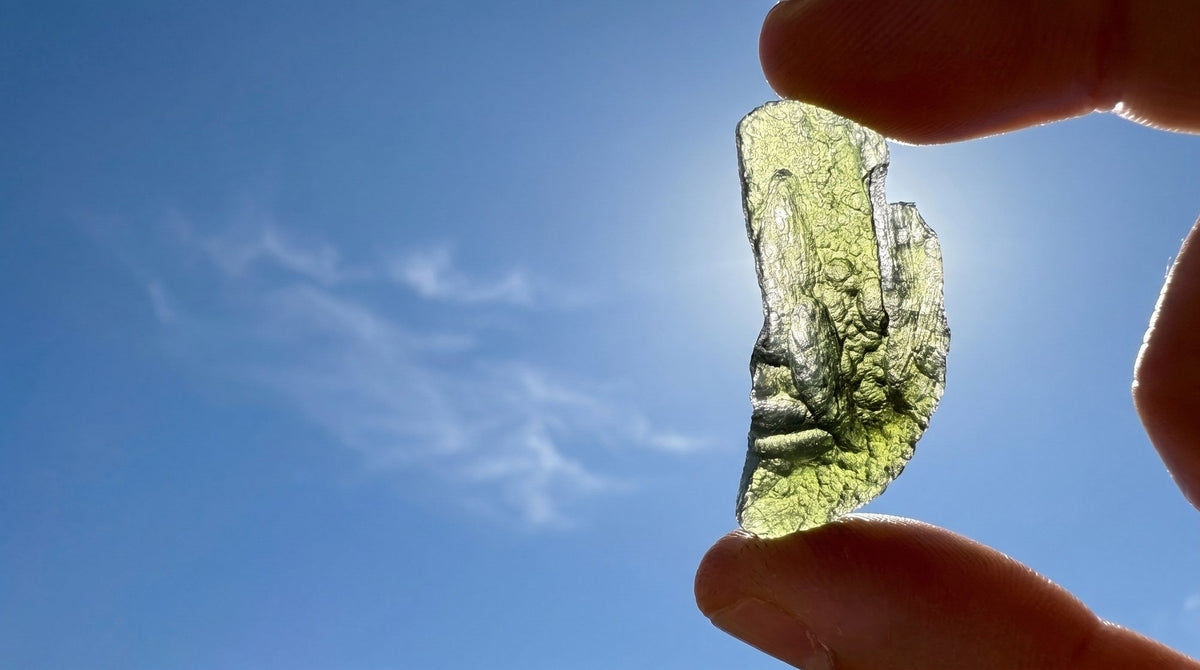
Moldavite is a natural glass made by a meteorite impact. About 15 million years ago an asteroid struck what is now southern Germany, and the molten sand it threw out cooled in the air and fell as green glass across Bohemia and Moravia (Wikipedia, Moldavite). That is the whole story in two sentences. The rest of this guide is the detail collectors ask about, and the part that matters most if you are about to buy one: how to tell real moldavite from green glass.
How did moldavite form?
Moldavite formed when an asteroid roughly 1.5 km across hit southern Germany at about 20 km per second, 14.8 million years ago (Wikipedia, Nordlinger Ries). The impact left a crater with an original rim about 24 km in diameter. The town of Nordlingen sits inside it today, about 6 km from the center.
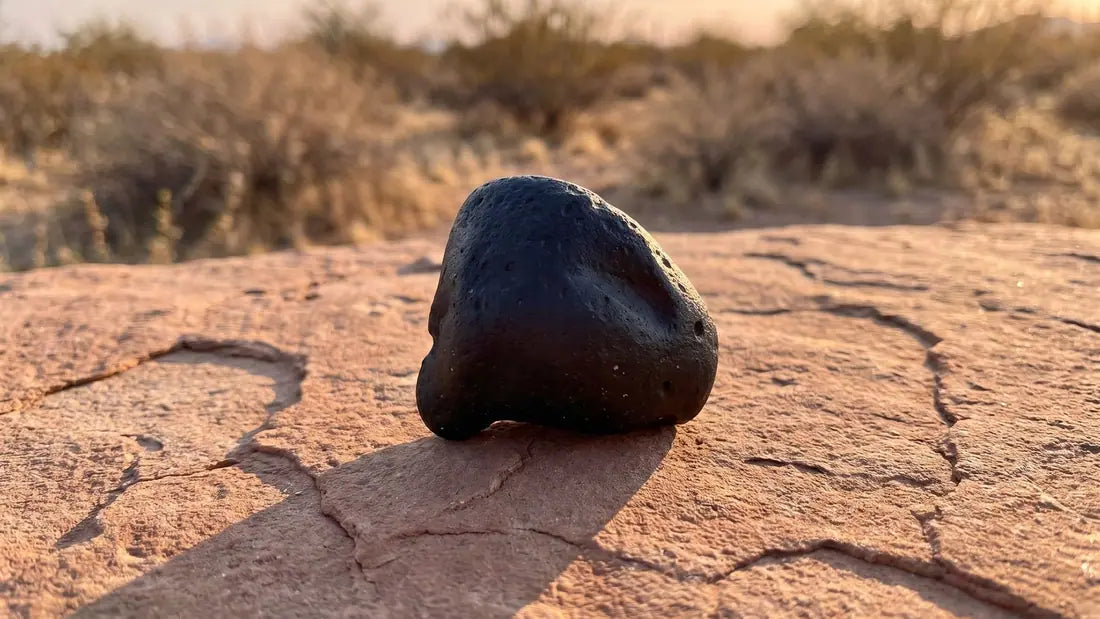
The glass did not form in the crater itself. The Ries article puts it plainly: "The tektite melt originated from a sand-rich surface layer that was ejected to distances up to 450 km (280 mi) downrange." That sand melted in flight, cooled as it fell, and landed hundreds of kilometers to the east. This is why moldavite is found in the Czech Republic and not in Germany's crater.
The same impact left another signature. Stone buildings in Nordlingen contain millions of tiny diamonds, all less than 0.2 mm across, formed when the impact hit a local graphite deposit (Wikipedia, Nordlinger Ries). Moldavite is the gentle end of the same violent event.
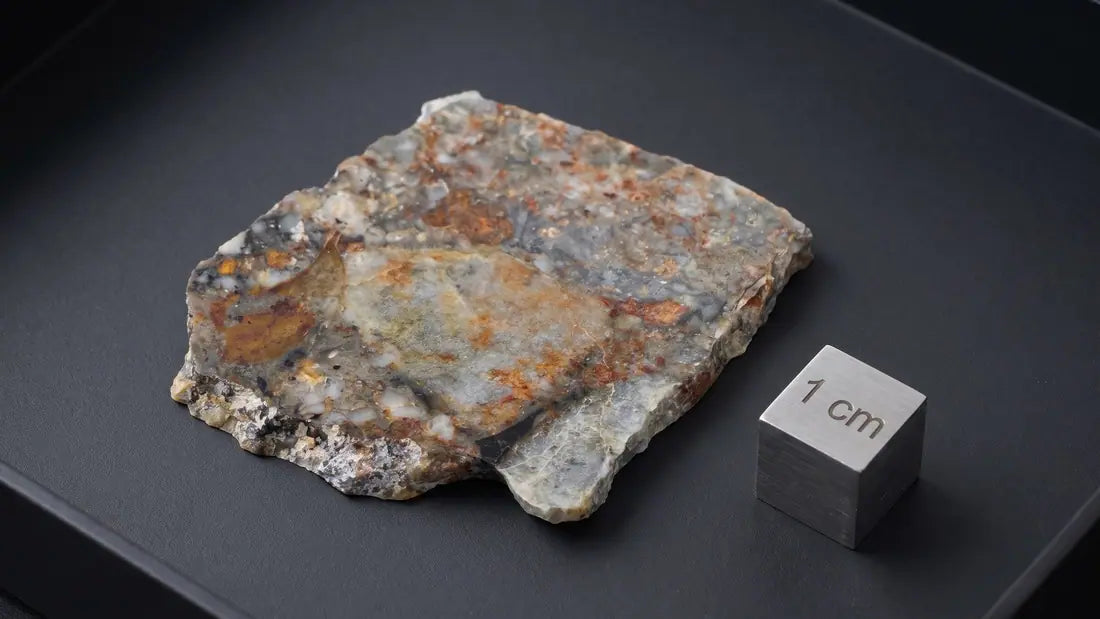
Most guides call moldavite a meteorite. It is not. No part of a moldavite came from space. It is Earth sand, melted by an impact and thrown clear. That distinction matters when you compare it with the iron meteorites in our Meteorites collection, which are the visitor rather than the ground it hit.
Where is moldavite found?
Moldavite is found in Germany, the Czech Republic and Austria, with the main concentrations in southern Bohemia, western Moravia, the Cheb Basin in northwest Bohemia, Lusatia in Germany and the Waldviertel in Austria (Wikipedia, Moldavite). Rare pieces from southwestern Poland are thought to be material moved there later.
Southern Bohemia is the classic source and the one most sellers mean when they say Czech moldavite. The supply is finite. The glass fell once, 15 million years ago, and everything that will ever be found is already in the ground.
Every piece in our Moldavite collection is Czech, and each listing gives the weight to the hundredth of a gram, the measurements in inches and a photograph of the exact stone that ships.
What is moldavite made of?
Moldavite is a tektite, and tektites are natural glass with more than 65 percent silica by weight and almost no water, less than 0.02 percent, which sets them apart from volcanic glass (Wikipedia, Tektite). The chemical formula is written as silicon dioxide with aluminum oxide (Wikipedia, Moldavite).
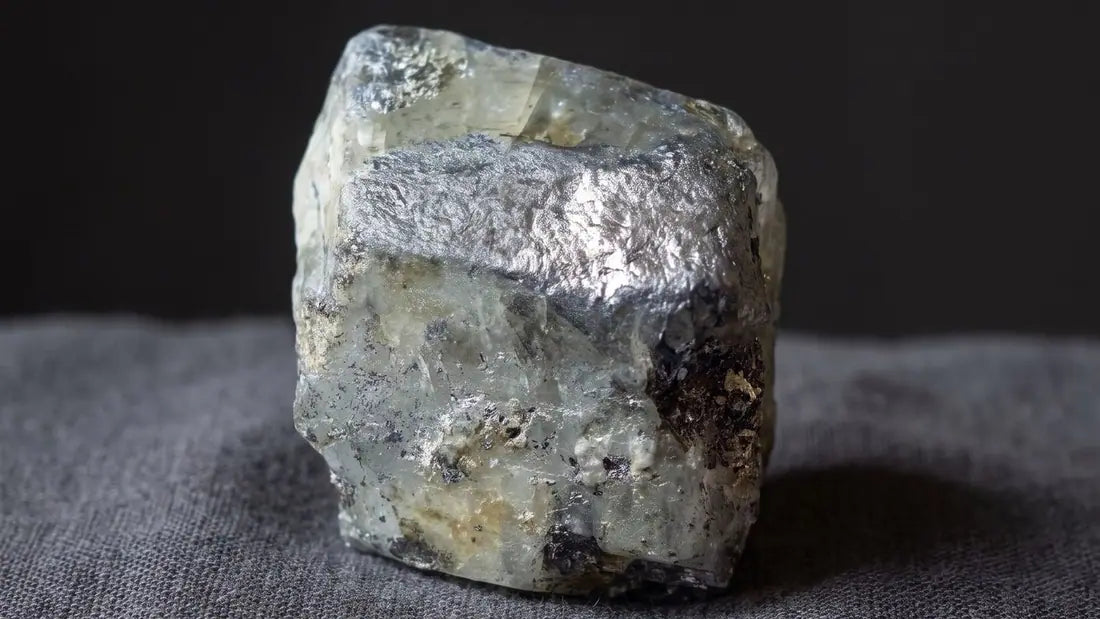
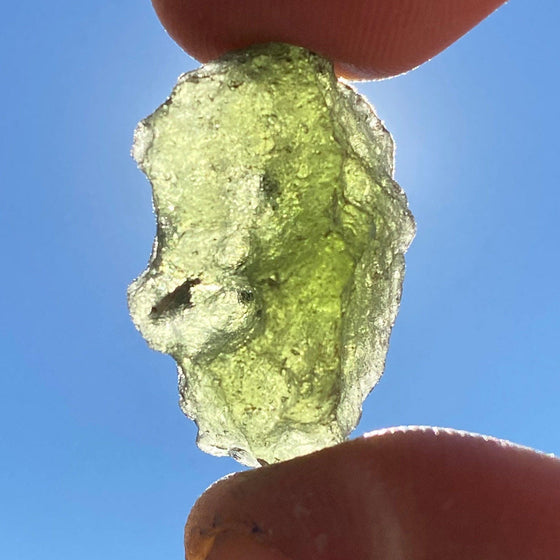
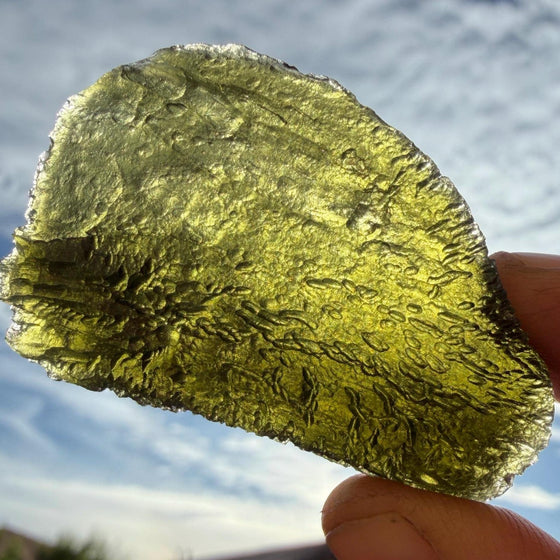
The color is forest green, olive green or blue green, and the classic description is a mossy green with swirls and bubbles. Hold a piece to the light and you see why it has been valued since long before anyone knew what it was.
That last point is not a figure of speech. People of the Aurignacian period, roughly 43,000 to 26,000 years ago, knapped moldavite into flaked tools (Wikipedia, Moldavite). The stone in your hand has been picked up and worked by humans for tens of thousands of years.
How can you tell real moldavite from fake?
Real moldavite can be told from most green glass imitations by its worm like lechatelierite inclusions and its flow marks, called schlieren (Wikipedia, Moldavite). Lechatelierite is pure silica glass that formed at a higher temperature than the surrounding melt and shows up as thin, twisting threads inside the stone. Molded glass does not have them.
Three practical checks follow from that:
- Look inside, not at the surface. Under a loupe, real moldavite shows twisting threads and stretched, elongated bubbles. Fakes have round bubbles or none at all.
- Look at the surface texture. Natural moldavite has a pitted, sculpted skin from millions of years in the ground. Cast glass is smooth or has a repeating pattern from a mold.
- Be suspicious of perfect color and perfect shape. Uniform bottle green, identical pieces and very low prices per gram are the pattern of manufactured glass.
Will put it this way on our first call: "I appreciate the science of it, but also I love the energy and the frequency that each of these treasures bring." The science is what lets you trust the energy. A piece with lechatelierite threads in it is 15 million years old whatever else you believe about it.
Prices have risen as moldavite became popular in crystal healing (Wikipedia, Moldavite), and that is exactly when fakes multiply. Buy by weight, from a seller who shows the actual piece.
How is moldavite used today?
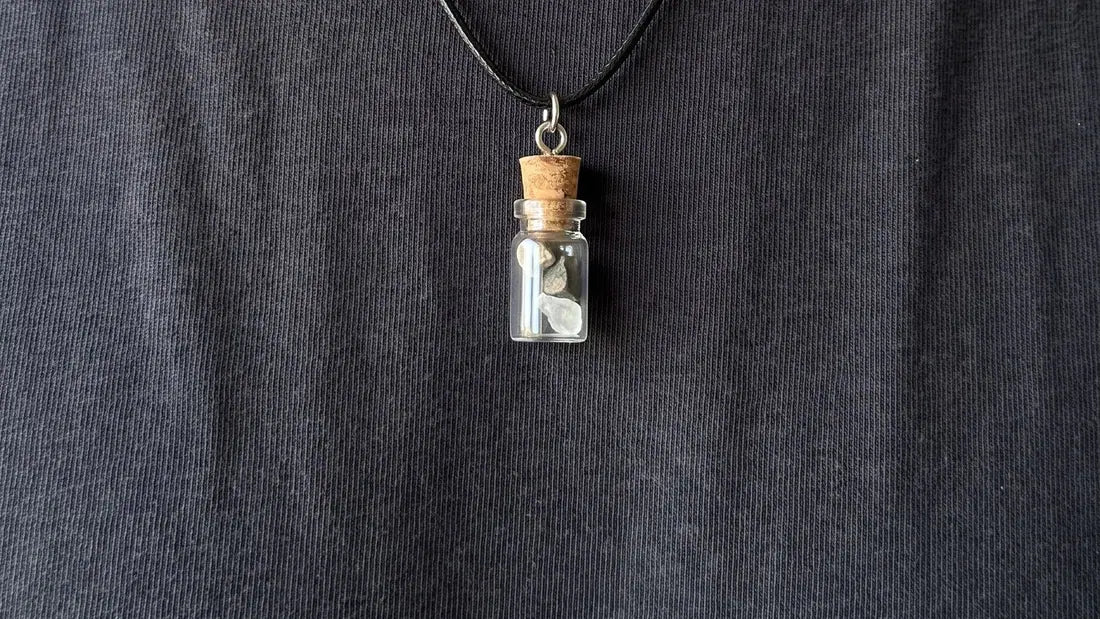
Today moldavite is cut and set as semi precious jewelry and is widely used in crystal healing, where it is associated with transformation (Wikipedia, Moldavite). We sell it two ways: as raw specimens by weight in the Moldavite collection, and alongside the other impact glasses in the Tektites collection.
Whatever you buy it for, the listing reads the same. The science first: where it came from, what it weighs, how big it is. Then the metaphysical, in one plain sentence. You decide which half matters to you.
Frequently asked questions
Is moldavite a meteorite?
No. Moldavite is Earth material, a sand rich surface layer melted by an asteroid impact about 14.8 million years ago and thrown up to 450 km from the crater (Wikipedia, Nordlinger Ries). It is a tektite, an impact glass, not a piece of the impactor.
Why is moldavite green?
Moldavite is silica glass with aluminum oxide and trace elements from the sand it formed from, and it comes out forest green, olive green or blue green (Wikipedia, Moldavite). The exact shade varies by locality, which is one reason collectors care where a piece was found.
How much does real moldavite cost?
Moldavite is sold by weight, and prices have risen with its popularity in crystal healing (Wikipedia, Moldavite). Our pieces are listed one at a time with the weight, the size and the price on each; see the current range in the Moldavite collection.
How do I know yours is real?
Every piece is Czech, photographed as it is, and listed by its own weight, so what you see is the stone that arrives. Will has been in this trade for eight years and buys from people he has known for years and at the shows in Tucson.
What arrives with a moldavite?
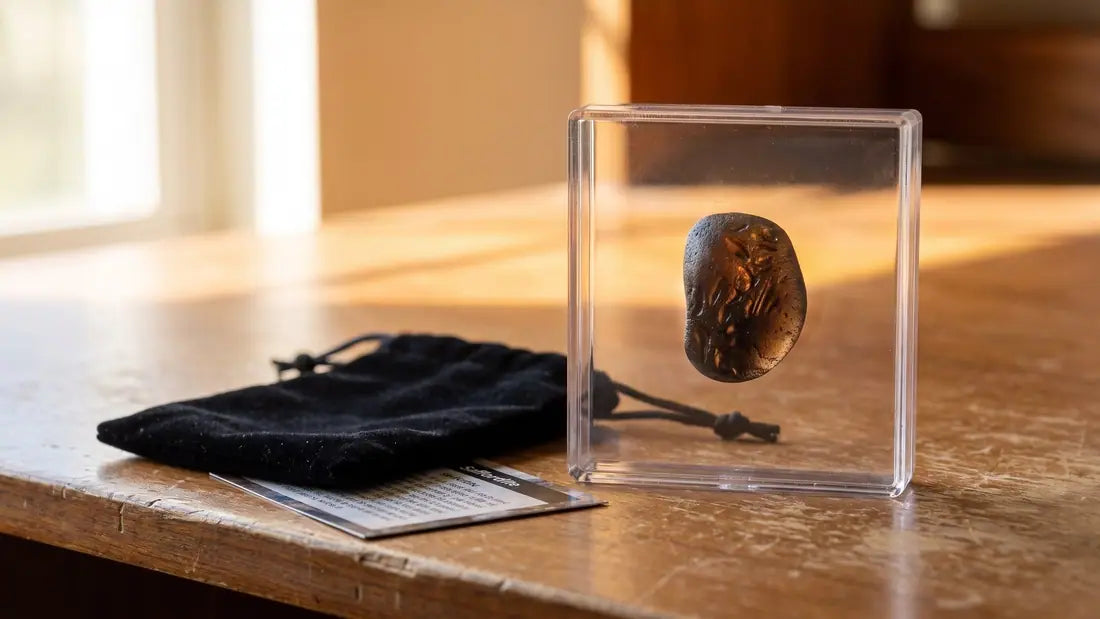
Most pieces ship with a display case and a velvet carrying bag, and the listing says exactly what comes with that piece. Orders leave within one day, United States shipping is free over 75 dollars, and there is a 30 day return policy.
The short version
Moldavite is 15 million year old impact glass from the Ries event, found in Bohemia and Moravia, made of dry silica glass, and identified by lechatelierite threads and flow marks that no factory can fake. If you want to see the real thing weighed and photographed piece by piece, start with the Moldavite collection. If you want the wider family, the tektite guide is next.
Shop 40 moldavite pieces