

GuideHigher Level Creations
What is a prophecy stone
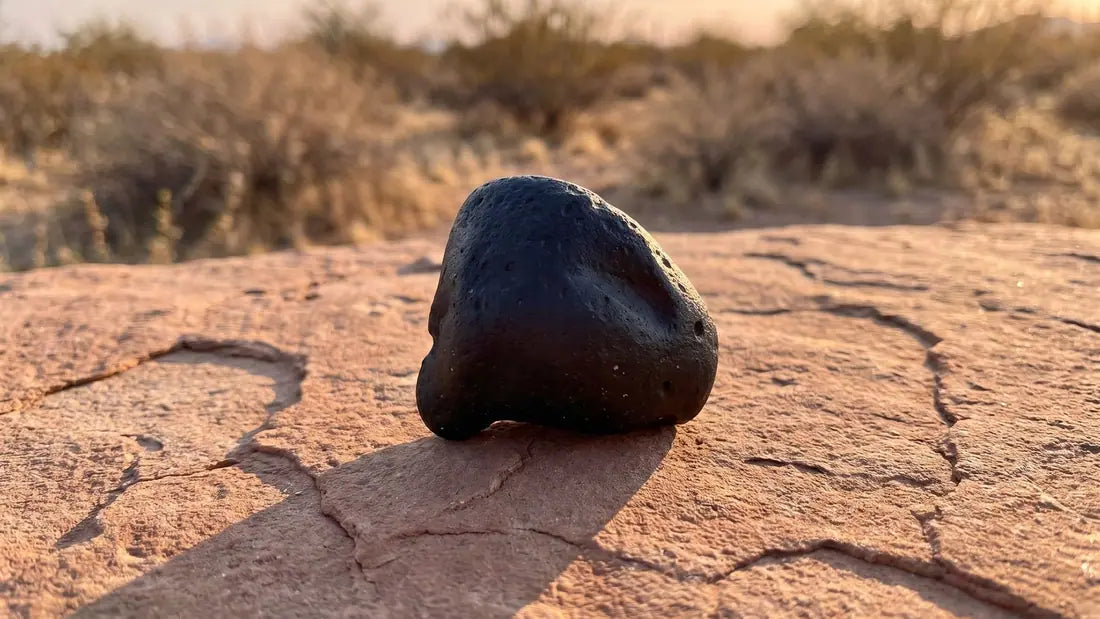
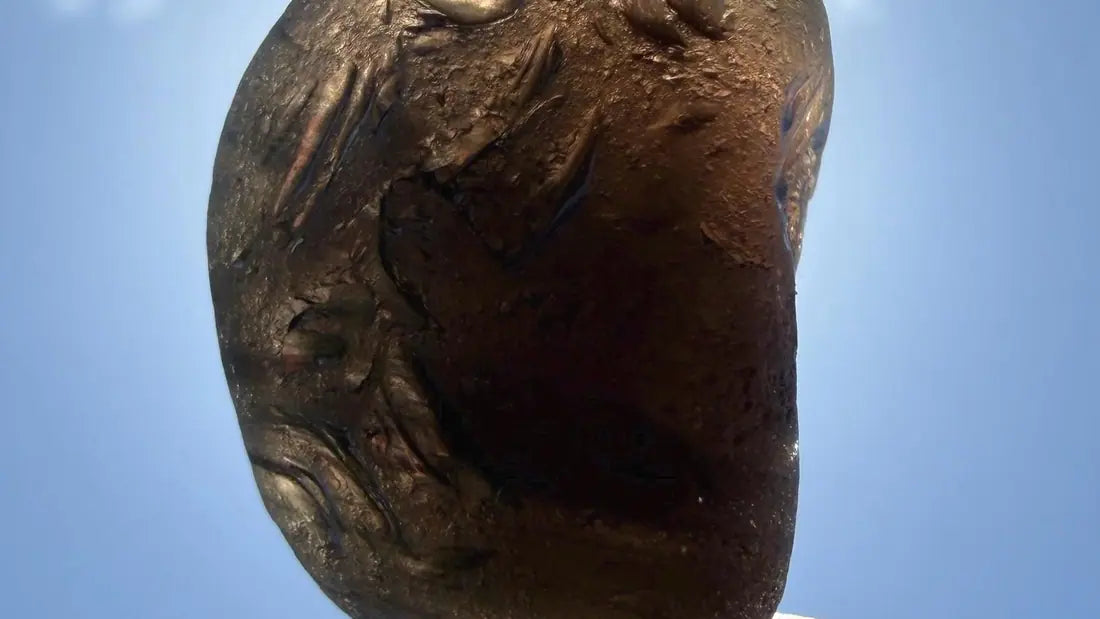
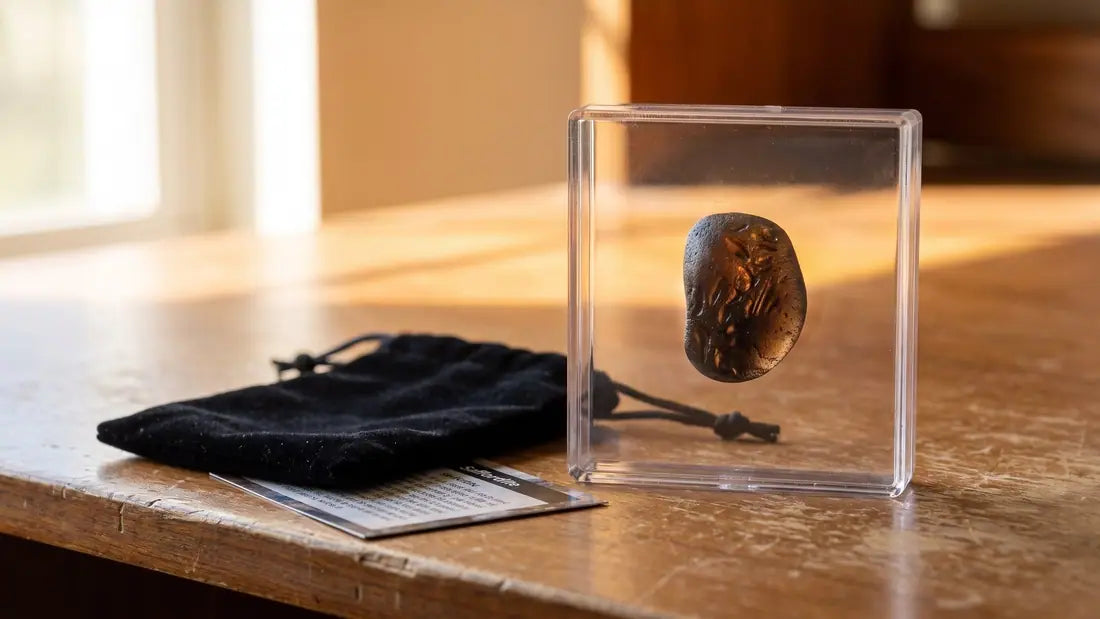
A prophecy stone is a trade name. The geological name is a pseudomorph of goethite after marcasite: an iron sulfide crystal that formed in the chalk of Egypt's Western Desert, then oxidized into iron hydroxide while keeping its original shape (Wikipedia, Goethite). The result is a heavy, dark brown, oddly sculpted stone that looks like it fell from space and did not. This guide explains what it is, where it comes from and what to look for.
What is a prophecy stone, geologically?
A prophecy stone is a pseudomorph, which means a mineral that has the outer shape of a different mineral. Here the shape belongs to marcasite and the substance is goethite. Goethite is an iron oxyhydroxide, formula written as alpha FeO(OH), and it is "the main component of rust and bog iron ore" (Wikipedia, Goethite).
Goethite "often forms through the weathering of other iron-rich minerals," and the process is an oxidation, the change of iron from its ferrous to its ferric state, "which allows for goethite to exist at surface conditions" (Wikipedia, Goethite). Pyrite, siderite and marcasite are all named as minerals that alter into goethite this way. Along the way some of the iron can also end up as limonite or hematite, which is why sellers list prophecy stones under all three names.
A prophecy stone is a fossil of a chemical reaction. The marcasite is gone. What you hold is the rust that replaced it, atom by atom, so slowly that the crystal's shape survived. Nothing about it is a concretion in the usual sense; it is a crystal that changed its mind about what it was made of.
What was marcasite, and why did it change?
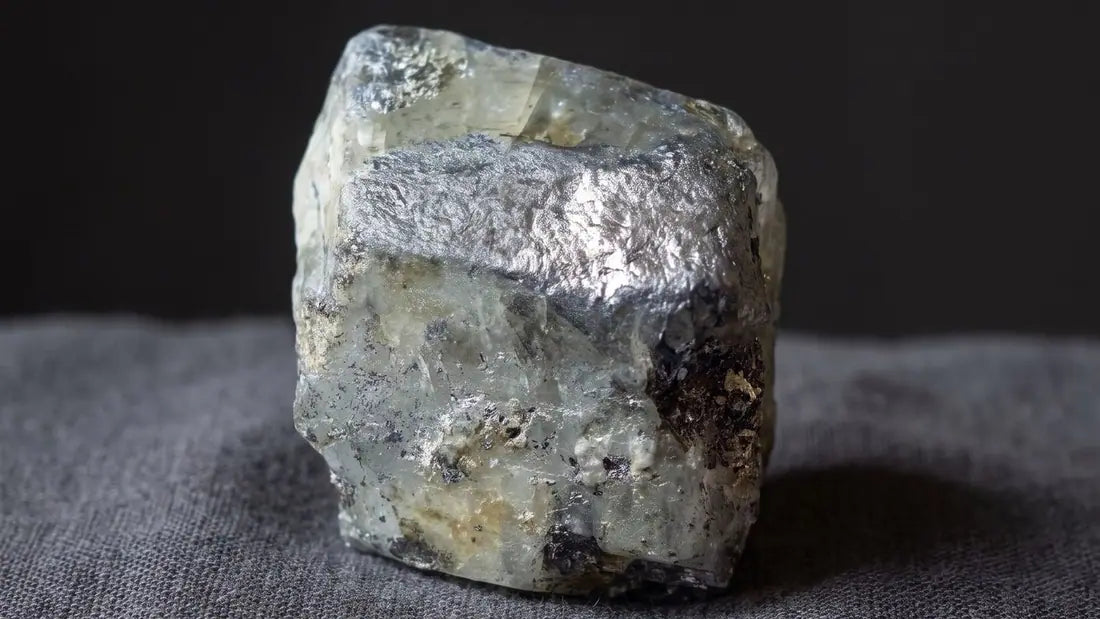
Marcasite is iron disulfide, the same formula as pyrite, but with an orthorhombic crystal structure where pyrite's is cubic. It is "lighter and more brittle than pyrite" and it is unstable. Wikipedia states that "Marcasite reacts more readily than pyrite under conditions of high humidity," breaking down to iron sulfate and sulfuric acid, a process collectors call pyrite decay (Wikipedia, Marcasite).
Marcasite forms in sedimentary rocks, "shales, limestones, coals," and in low temperature hydrothermal veins, typically in acidic conditions (Wikipedia, Marcasite). Chalk is a limestone. Iron sulfide crystals grew in the Egyptian chalk, the desert surface exposed them, and oxygen and moisture did the rest over a very long time.
The instability that ruins marcasite specimens in a collector's drawer is the same instability that made prophecy stones. Left in the ground for long enough, the sulfide is fully replaced and the result is stable. What arrives at your door is the finished reaction.
Where do prophecy stones come from?
From the White Desert of Egypt, north of the Farafra Oasis in the Western Desert. The Farafra depression covers about 980 square kilometers and is the second largest depression in Western Egypt by size and the smallest by population (Wikipedia, Farafra Oasis). Its White Desert, Sahara el Beyda, is a national park about 45 km north of the town of Farafra, known for chalk rock "colored from snow-white to cream" shaped by sandstorms into textbook ventifacts.
That chalk is the host rock. The dark, heavy iron stones lie on and in the white chalk, which is part of why they were once taken for meteorites. They are not. They are Egyptian sea floor, turned to chalk, that grew iron sulfide crystals which later rusted in place.
Why is it called a prophecy stone?
The name comes from the crystal trade, not from geology or from Egypt. Stories about who named it and why circulate among sellers, and we have not been able to verify them against a reliable source, so we do not repeat them. What is certain is that the name is recent, that the geological name is goethite after marcasite, and that the stone is sold under prophecy stone, Egyptian prophecy stone and its mineral names interchangeably.
Goethite itself has a long human history. It "has been well known since ancient times for its use as a pigment (brown ochre)," found in paint samples from the caves of Lascaux, and heat treated for red pigment since Paleolithic times (Wikipedia, Goethite). The material in a prophecy stone is the same material people painted with tens of thousands of years ago.
What do collectors look for?
Three things:
- Form. The whole point of a pseudomorph is the shape. Look for a complete crystal outline, sharp edges where the marcasite blades met, and the knobbly, folded surfaces that make these stones look like small meteorites.
- Surface. Goethite runs from yellowish through reddish to dark brown or black, with a brown to orange yellow streak (Wikipedia, Goethite). A prophecy stone should be dark and lustrous. Dusty yellow patches are limonite and are normal in small amounts.
- Weight in the hand. Iron minerals are dense. A prophecy stone feels heavier than a rock its size should.
Two of the reviews on our own homepage are about prophecy stones. One customer wrote that she could not wait to make hers part of her readings as a psychic intuitive and medium; another called his a high quality specimen with interesting form. We list the geology first on every stone we sell and leave what it means to the person holding it.
Do we sell prophecy stones?
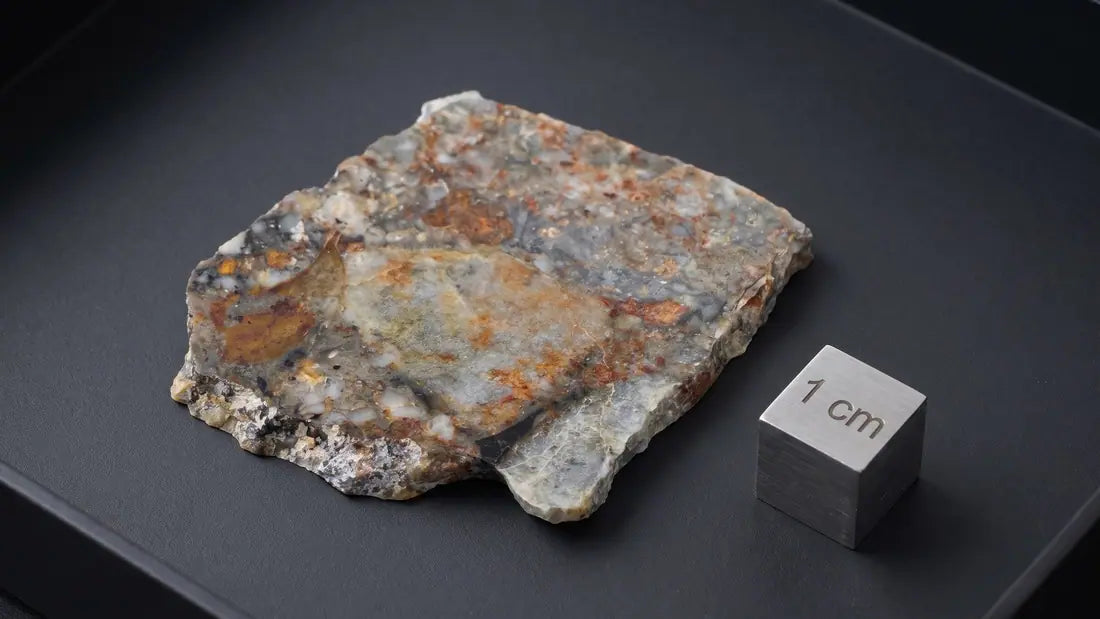
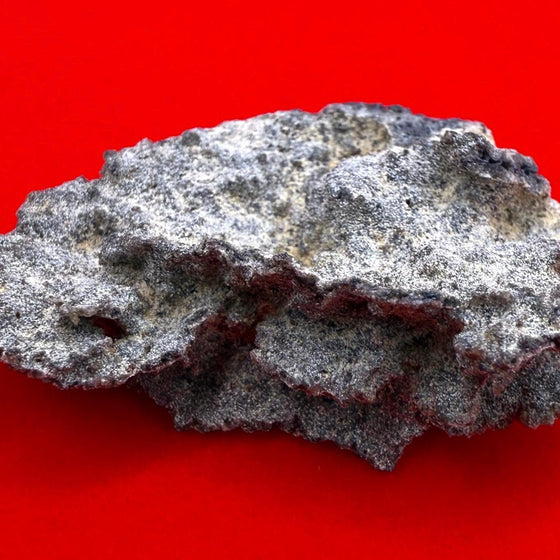
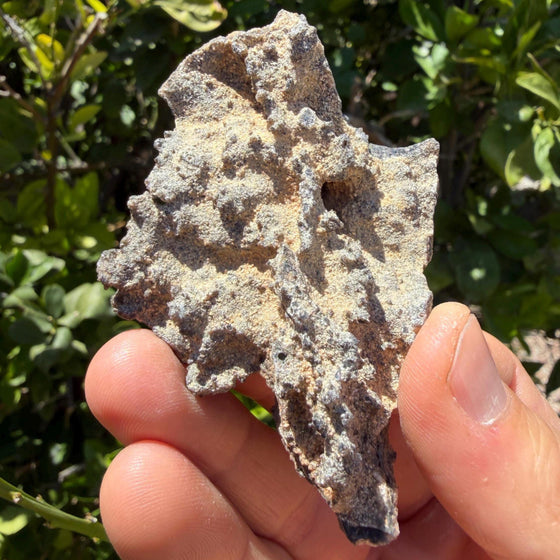
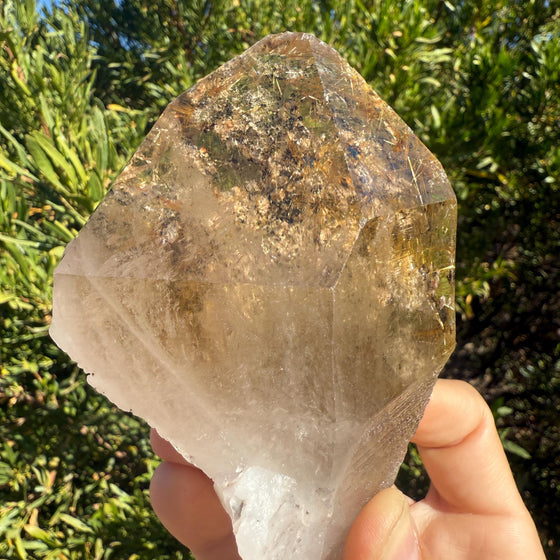
Not at the moment. We have sold them in the past and our customers have written about them, but there are none in stock as this is written and the old collection page is empty. Our terrestrial pieces, including Sahara fulgurite and blue dumortierite, are in the Earth Specimens collection, and our house stone from the Arizona desert is in the Saffordites collection. If you want a prophecy stone, write to us; stock moves faster than the website does.
Frequently asked questions
Is a prophecy stone a meteorite?
No. It is goethite, an iron oxide hydroxide, that replaced marcasite crystals in Egyptian chalk (Wikipedia, Goethite). The resemblance to a meteorite is why the confusion started.
What is a pseudomorph?
A mineral that has taken the outer form of another mineral it replaced. Goethite commonly forms as a pseudomorph after pyrite, siderite and marcasite through oxidation (Wikipedia, Goethite).
Where in Egypt are they found?
In the White Desert, a national park about 45 km north of the town of Farafra in the Western Desert, known for its snow white to cream chalk formations (Wikipedia, Farafra Oasis).
Will a prophecy stone rust or fall apart?
The reaction that makes it is already finished, so it is far more stable than fresh marcasite, which "reacts more readily than pyrite under conditions of high humidity" (Wikipedia, Marcasite). Keep it dry and it will last.
Do you have prophecy stones for sale?
Not today. See the Earth Specimens collection for our terrestrial pieces, or write to us and we will tell you when one comes in.
The short version
A prophecy stone is goethite after marcasite from the White Desert of Egypt: an iron sulfide crystal that rusted in place inside ancient chalk and kept its shape. It is not a meteorite, the name is a trade name, and a good one shows sharp crystal form, a dark lustrous surface and real weight. Our current terrestrial pieces are in Earth Specimens.
Shop 26 earth specimens