
GuideHigher Level Creations
What is a saffordite
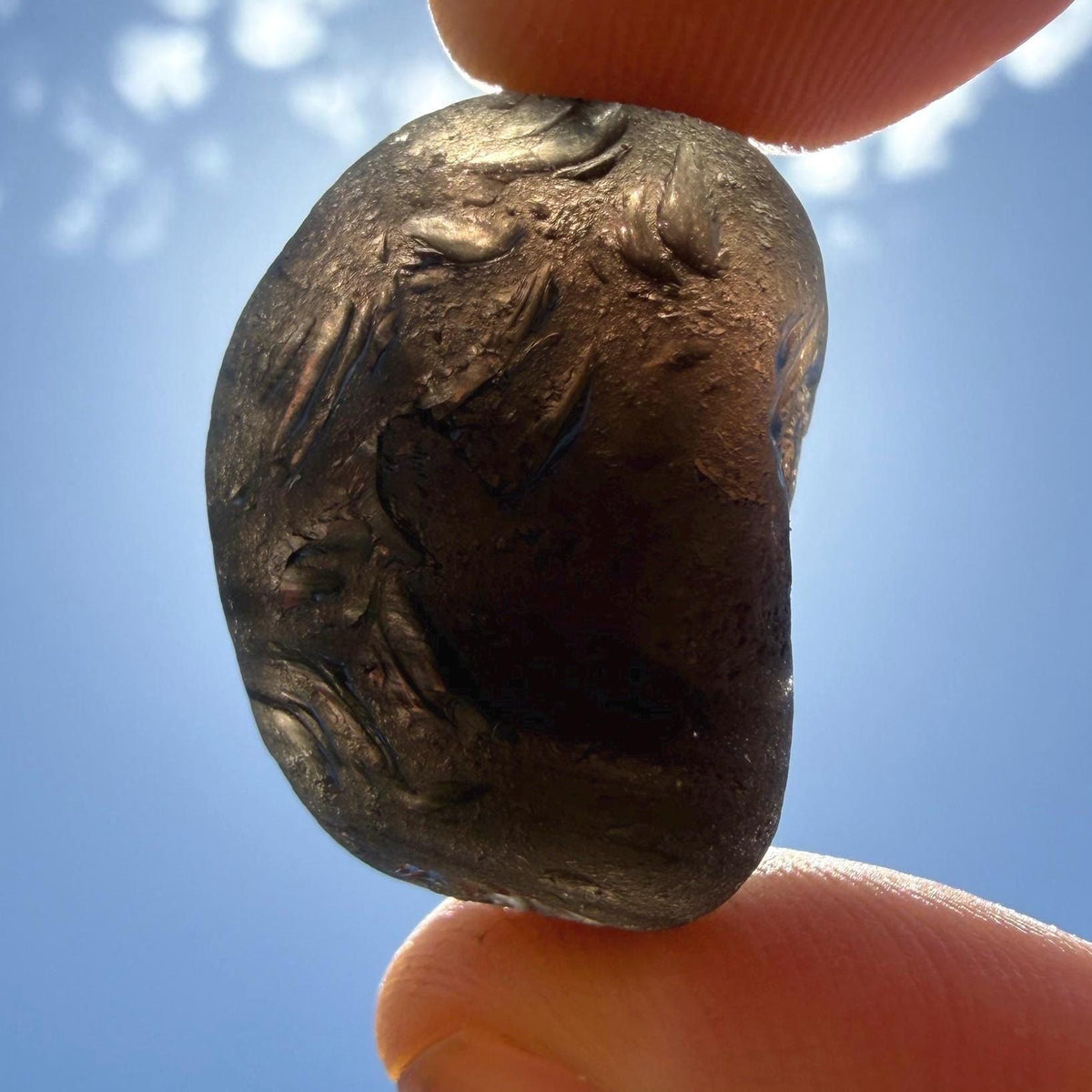
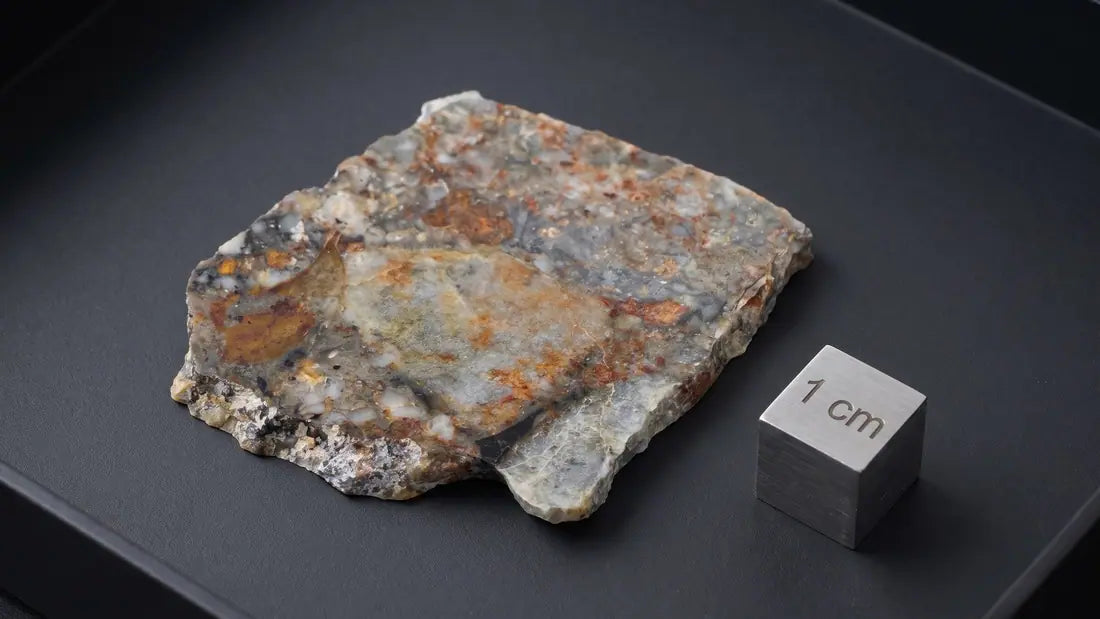
A Saffordite is a rounded, translucent glass stone found in one small area of southeast Arizona, east of Mount Graham and southeast of the town of Safford it is named after (CosmoQuest, Lebofsky 2016). It looks like a tektite. It is not one. Saffordites are weathered volcanic obsidian, which is why every listing in our Saffordites collection calls them a pseudo tektite. This is our house stone, and this guide is the honest version of what it is.
Why is a saffordite a pseudo tektite and not a true tektite?
Because of how it formed. Larry Lebofsky, a planetary scientist writing for CosmoQuest in 2016, is direct about it: Saffordites are weathered Earth rocks that are "chemically and physically similar to volcanic obsidian glass and not tektites" (CosmoQuest, Lebofsky 2016).
A true tektite is ground melted by a meteorite impact and thrown into the air, and it holds almost no water, less than 0.02 percent (Wikipedia, Tektite). A Saffordite started as obsidian, the glass a volcano makes when lava cools fast. Lebofsky describes what happened next: "As this rock weathers over tens of millions of years, it absorbs some water, loses its glass-like nature, and fractures into roundish rocks."
So the two stones can look alike and are opposites in origin. One fell from the sky as glass. The other rose from the ground as glass and was rounded by time and water. Our tektite guide covers the true tektites, and we keep the two apart on every listing.
The trade has spent years arguing whether Saffordites are tektites. The argument is settled and it does not lower the stone. A Saffordite is a piece of an Arizona volcano, rounded over millions of years and found nowhere else on Earth. That is a rarer thing than one more black tektite from a strewn field that covers three countries.
Where do saffordites come from?
From a stretch of desert "east of Mt Graham and southeast of the city of Safford in southeast Arizona, several hours east of Tucson" (CosmoQuest, Lebofsky 2016). The known area "covers many square miles, maybe tens or hundreds of square miles," which matches the roughly hundred square mile radius our listings give.
The strange part is that nobody knows where they originally came from. The rounded stones are found on the surface, but the volcanic source they weathered out of has not been identified. Lebofsky writes that "they may have been transported to their present location, so their source is unknown." Collectors have hunted the area for years, and the parent rock is still missing.
That is where the age question sits too. Sellers, including our own listings, quote about 30 million years for the glass. The scientists who have written about Saffordites say only that they are many million year old weathered volcanic rocks and give no exact figure. We use the trade figure and we tell you it is a trade figure.
What does a saffordite look like?
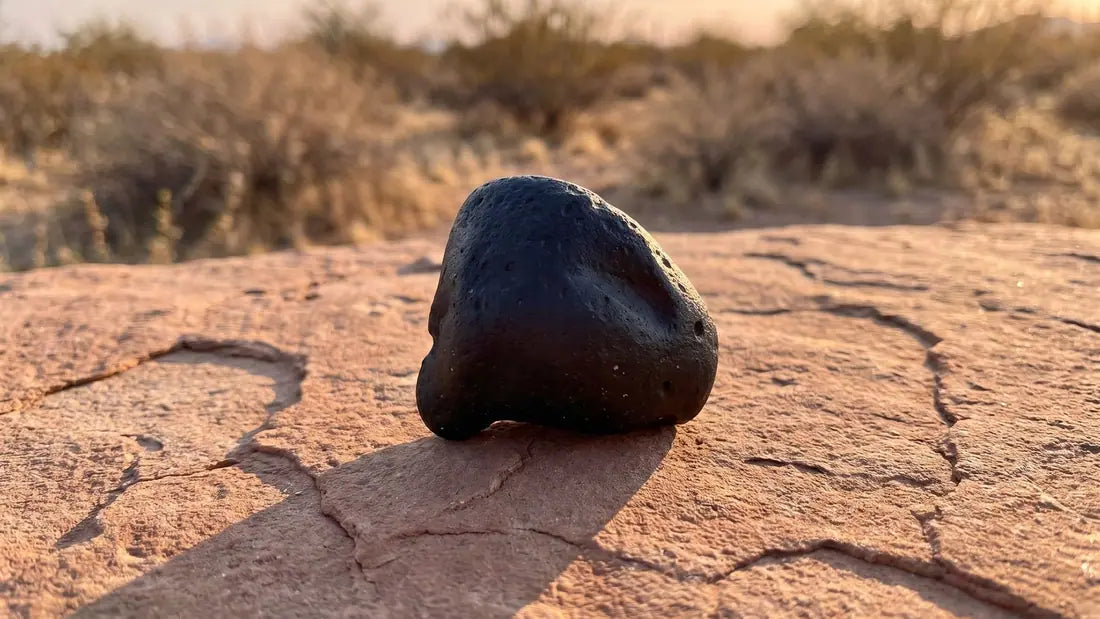
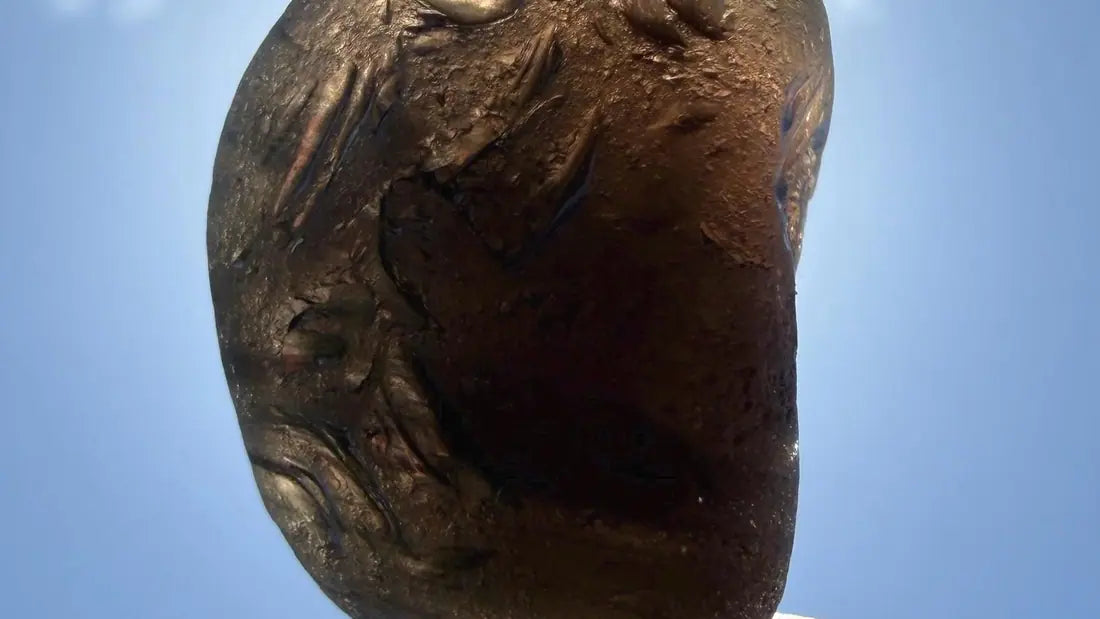
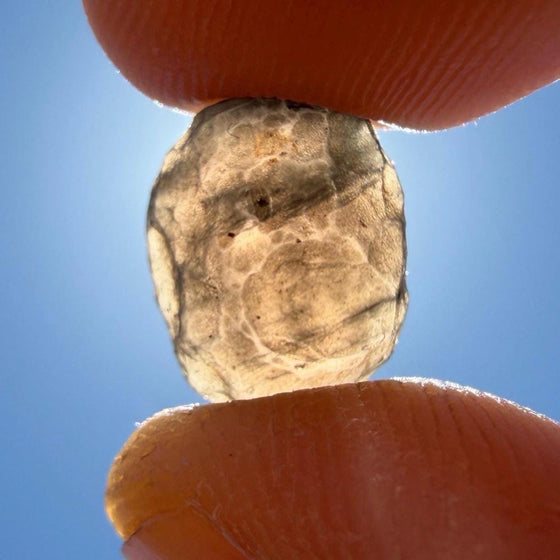
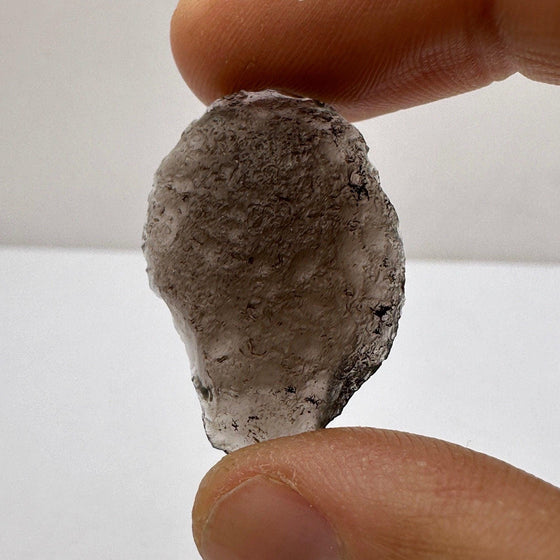
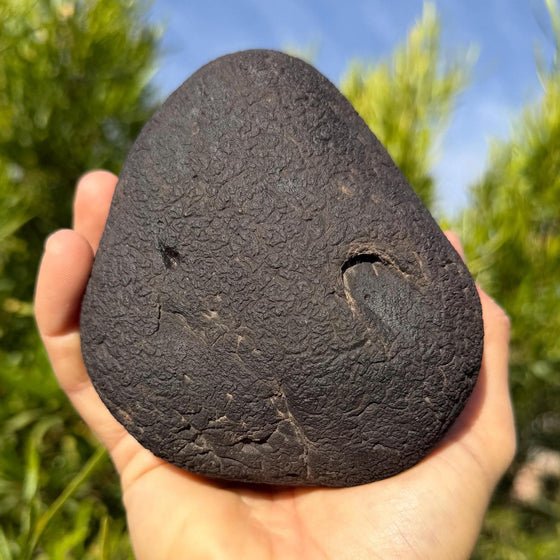
On the ground, a black rock. In the hand, a lot more. Lebofsky's field advice is that "you are looking for a black rock" and that "the good Saffordites will be translucent" (CosmoQuest, Lebofsky 2016). Hold one to the light and the black turns brown, amber or violet, and you can see how much of the glass is still glass.
The surface is the other tell. Saffordites are rounded and often pitted or etched, the mark of water and time on obsidian. A sharp edged, glossy black stone is fresh obsidian, not a Saffordite.
Every Saffordite in our collection is photographed as it is, in daylight, usually held against the sky so you can see the translucency for yourself. The photograph is of the stone that ships.
Where did the name Cintamani come from?
From a story much older than the stone. The Cintamani is a wish fulfilling jewel in Hindu and Buddhist tradition, described as resembling a pearl, connected to Vishnu and Ganesha in Hinduism and held by bodhisattvas in Buddhism as a symbol of the Buddha's teachings (Wikipedia, Cintamani).
The stone trade adopted the name for Saffordites, and it stuck. You will find them sold as Cintamani stones, Arizona tektites and American moldavite. We use all three names on our collection page so that whichever one you searched, you land on the same stones, and we tell you what they are once you arrive.
Will lives in Tucson, "the home of the largest gem and mineral show in the world," and has been in this trade for eight years. Saffordites are the one stone in the shop that comes from the desert he lives in, which is why they are the house specialty and why the collection is the largest single group we carry.
How do you read a saffordite listing?
Every listing in the Saffordites collection is written the same way:
- Weight and price per gram. Each stone is weighed to the hundredth of a gram and the price per gram is on the listing, so you can compare one piece against another instead of guessing. Price moves with weight, translucency and surface, and nothing else.
- Size and photograph. Measurements in inches and the photograph of the exact piece, usually against the sky.
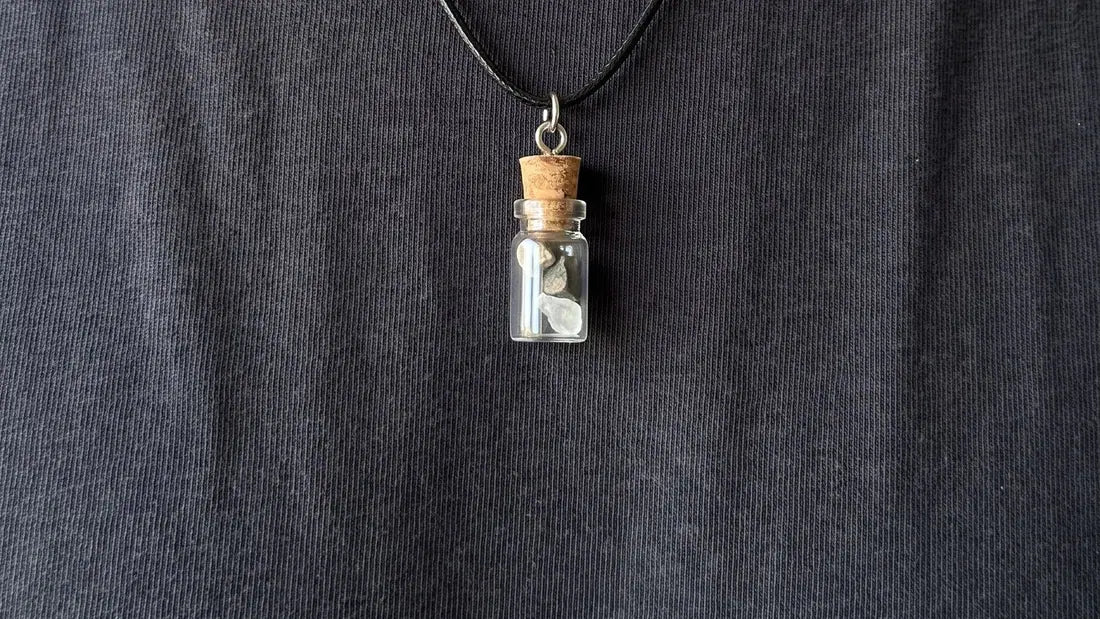
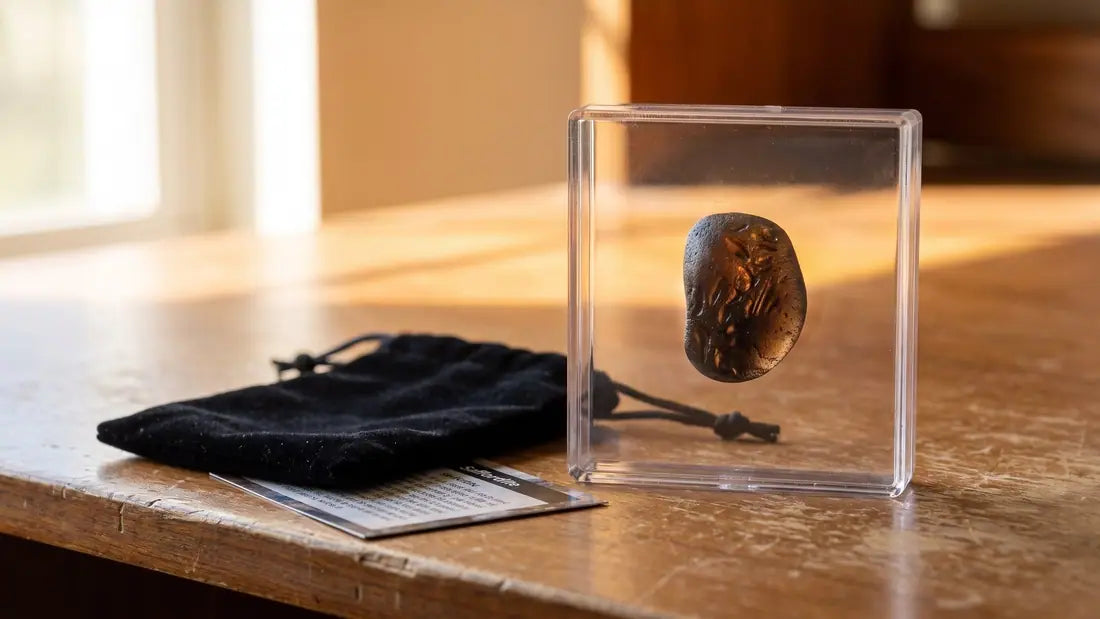
- What is in the box. Every Saffordite ships with a floating display case, a macrame necklace, an information sheet and a velvet carrying bag.
Sixty three are in stock as this is written, from 21 dollars. They are listed one at a time, so when a stone is gone it is gone.
Frequently asked questions
Is a saffordite a real tektite?
No. Saffordites are weathered volcanic obsidian that resemble tektites, which is why they are called pseudo tektites (CosmoQuest, Lebofsky 2016). A true tektite forms in a meteorite impact.
Where are saffordites found?
Only in southeast Arizona, east of Mount Graham and southeast of Safford, over an area of tens to perhaps hundreds of square miles (CosmoQuest, Lebofsky 2016). The original volcanic source has never been found.
Is a saffordite the same as a Cintamani stone?
In the trade, yes. Cintamani is the name of a wish fulfilling jewel in Hindu and Buddhist tradition (Wikipedia, Cintamani), and sellers use it for Saffordites. Geologically the stone is weathered obsidian.
How do I know yours is real?
Every stone is photographed against the light so you can see the translucency, and listed by its exact weight with the price per gram. Will has been in this trade for eight years and buys from people he has known for years and at the shows in Tucson.
What arrives with a saffordite?
A floating display case, a macrame necklace, an information sheet and a velvet carrying bag, as every Saffordite listing says. Orders leave within one day, United States shipping is free over 75 dollars, and there is a 30 day return policy.
The short version
A Saffordite is rounded, translucent volcanic glass from one small area of southeast Arizona, weathered over millions of years, found nowhere else, and named after a wish fulfilling jewel by a trade that liked the fit. It is not a tektite and it does not need to be. See the 63 in stock in the Saffordites collection.
Shop 63 Saffordites